
The AI Power Podcast
If you work in AI policy — or you’re just fascinated by it — this is the podcast for you. Every week, The AI Power Podcast unpacks the developments that actually matter: AI regulation, safety, economic policy, U.S.–China competition, semiconductor export controls, and national security. Think of it as drinks after work with the smart friend who tells you what’s really going on, and what might actually work, in plain English.
Plus long-form interview episodes with the policymakers, builders, executives, and analysts shaping AI and the global power competition.
Hosted by Gregory C. Allen. A new show from Decision Tree Research.
Latest from The AI Power Podcast
Weekly analysis and long-form interviews on AI policy, semiconductors, defense, and the U.S.–China technology competition. Listen right here, or subscribe wherever you get your podcasts.
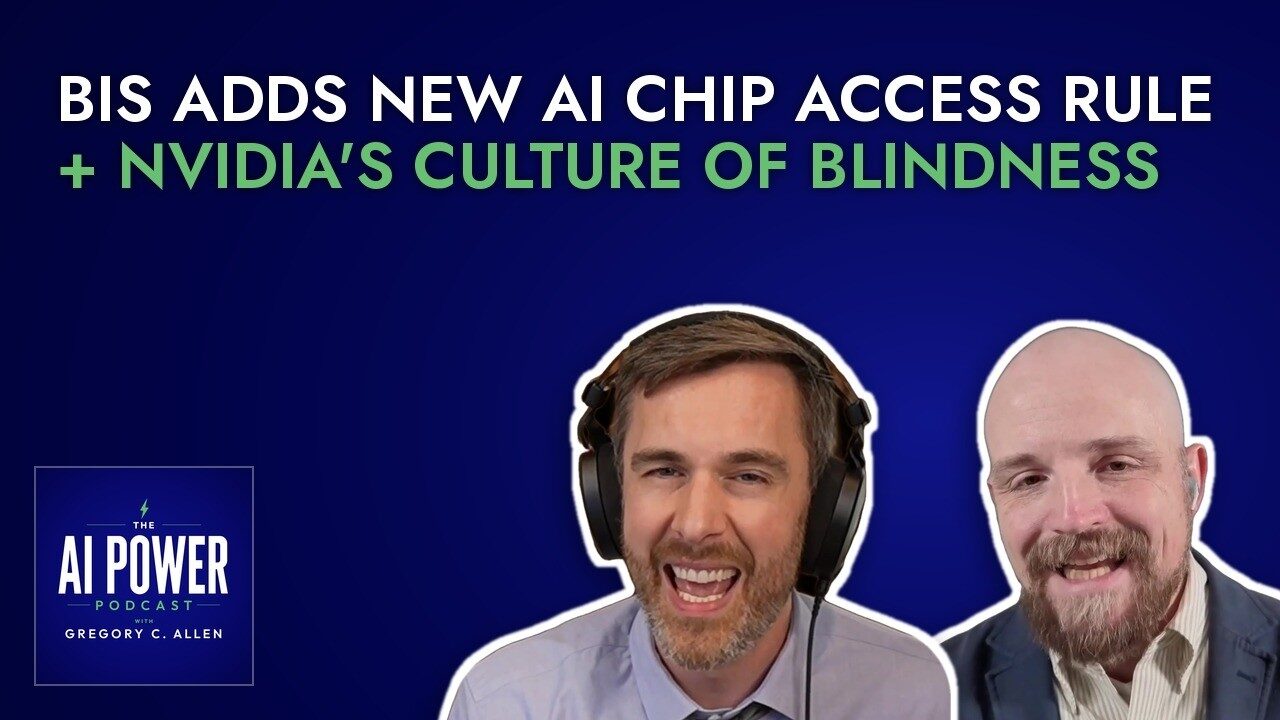
Trump Talks AI with Xi at APEC, Nvidia’s Troubles Far from Over, and Commerce Adds New Export Controls, but Are They Enough?
Greg and Adam Goodwin cover a busy week in AI policy after Jensen Huang’s resignation as CEO of Nvidia. They assess the thin AI news from Trump’s meeting with Xi at APEC, then turn to the new BIS export controls on China’s access to American AI chips, where Greg lays out the rule’s strengths and the loopholes it leaves open. They close on the mounting criticism of Commerce Secretary Lutnick and new reports that knowledge of chip smuggling reached beyond Huang inside Nvidia.
More episodes
23 earlier episodes · scroll to browse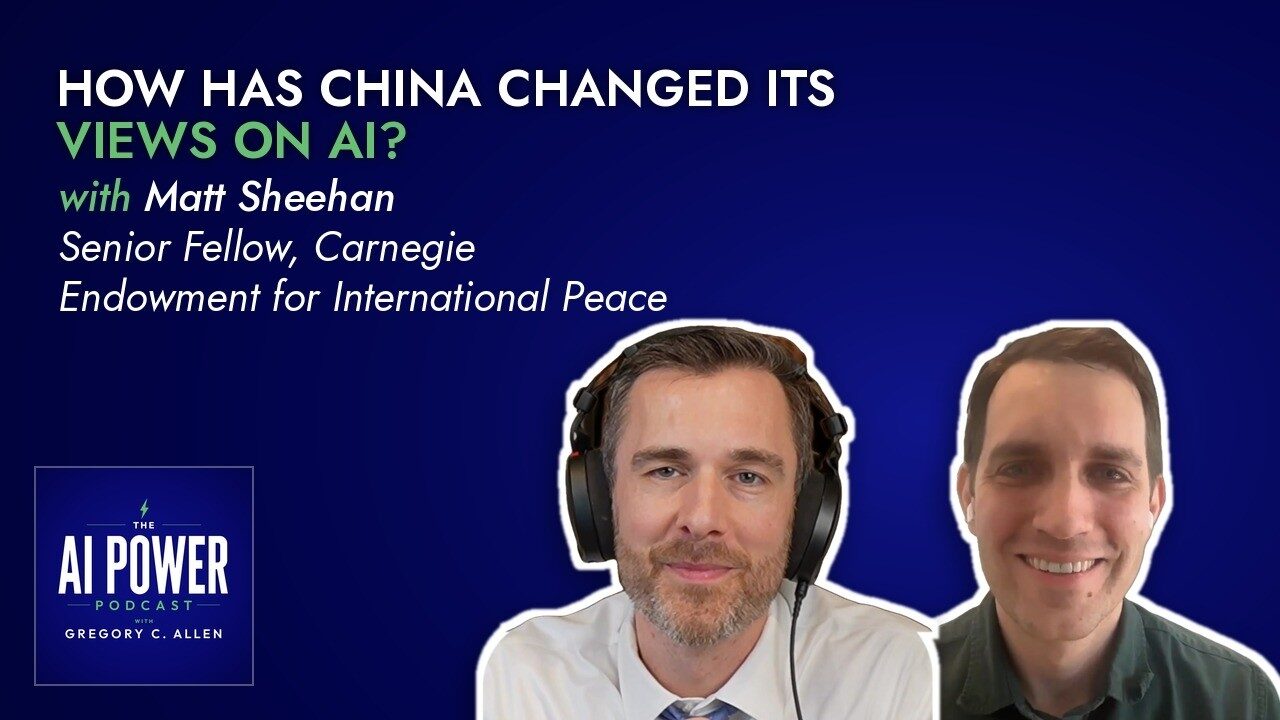
How China Changed Its Views on AI Safety and AI’s Impact with Matt Sheehan
Guest: Matt Sheehan, Carnegie Endowment for International PeaceMatt Sheehan of the Carnegie Endowment for International Peace joins Greg to examine how Beijing’s thinking on AI safety has evolved over the past year. They trace which institutions shape Chinese AI policy, what key policy documents reveal about how its decision makers see AI risk, and how the Mythos release and the Hugging Face incident shifted those views. They also weigh lessons from the 2024 U.S.-China AI talks, the case for pursuing AI safety in parallel, and China’s approach to open models, export controls, and AI’s impact on jobs.
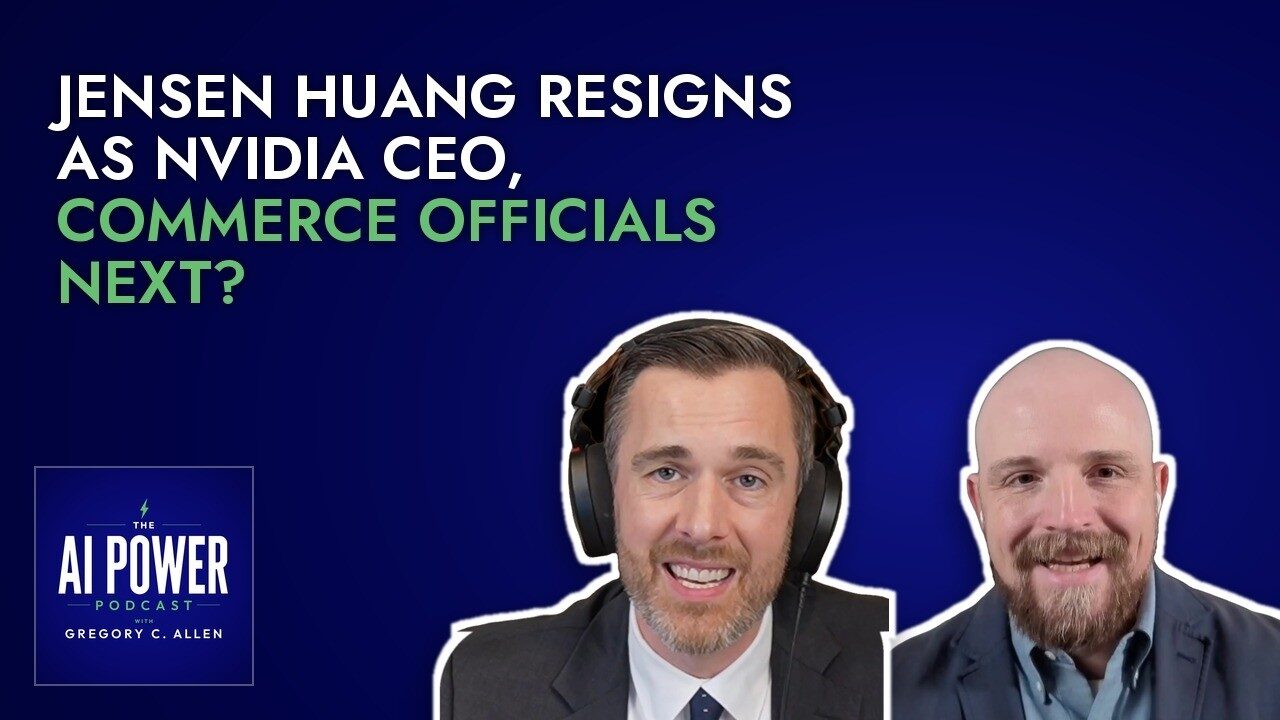
Jensen Huang Fired from Nvidia, Knives Out for Commerce Secretary Lutnick and Undersecretary Kessler
With co-host Adam GoodwinGreg and Adam Goodwin react to the breaking news that Jensen Huang has resigned as CEO of Nvidia, the company he co-founded in 1993. They weigh how it came to this, what it means for Nvidia, and whether the company or Huang deserves the benefit of the doubt. Then Greg assesses the shortcomings of Huang’s leadership on national security, the failures on the U.S. government side, and the bipartisan push in Congress for a full investigation.
Biden’s AI Policy Czar on the Past, Present, and Future of AI and National Security
Guest: Ben Buchanan, Johns Hopkins SAISBen Buchanan, the first White House Special Advisor for AI, joins Greg to discuss The Bitter Struggle, his new book with Tantum Collins on setting AI policy inside the Biden White House. They go deep on the October 2022 chip export controls and where they fell short, the National Security Memorandum on AI, and the place of safety in the strategy. They also compare the Biden and Trump approaches and draw lessons for today’s data center buildout.
The 2026 Midterm Elections and the Future of American AI Policy
With co-host Adam GoodwinGreg and Adam Goodwin break down Tuesday’s midterm results and the impact AI had on the outcome. They discuss how the albatross of data centers cost Republican candidates with voters, how Democrats capitalized on these concerns, and what to expect for the industry moving forward. Then, Greg and Adam preview Democrats’ likely legislation agenda towards AI and outline potential commonsense AI regulation for Congress to pass.
Nvidia CEO Hangs Out with Chinese Spy? + China’s New AI Export Controls + The AI/Cyber Month from Hell + AI in the Midterm Elections
With co-host Adam GoodwinGreg and Adam Goodwin dig into the New York Times report that Chinese intelligence targeted Jensen Huang through the CEO of an Nvidia partner company, and the long list of red flags around efforts to get Nvidia chips into China. Then they break down China’s new AI export controls, which bear a striking resemblance to the Biden-era Diffusion Rule, and what Beijing wants from them. Greg also recounts the PHP vulnerability and a record-setting “Black October” for AI-found vulnerabilities, and the episode closes on how voters feel about AI heading into the midterms.
How China Got 340 DUVi Lithography Machines and Why We Should Stop Selling Them with Saif Khan and Nick Brown
Guest: Saif Khan and Nicholas BrownEveryone talks about EUV, but China’s AI chips are made on older immersion DUV machines, and it now has around 340 of them. Saif Khan and Nick Brown of the Center for Technology and Statecraft join Greg to break down their 100+ page report on how China built that stockpile and why they say a countrywide export ban is the fix. They also cover whether China can build its own, and what it would take.
Trump Likes Mandatory AI Regulation for America but Not China? + Anthropic Defeats Distillation
With producer Jack ConlinGreg and Jack Conlin break down how an incident involving Anthropic’s AI agents pushed the White House’s Super Intelligence Task Force toward tougher de facto regulation and oversight of AI, and what CAISSI’s new name and more direct line to the White House mean. Greg argues that tightening the rules on U.S. models while leaving Chinese models unaddressed is inconsistent and puts American AI leadership at risk. Then: Anthropic reports it has stopped 90–99% of adversarial distillation, a core avenue for Chinese AI development. Will that advantage last?
Who Checks the AI Labs? Independent Verification with Andrew Freedman
Guest: Andrew Freedman, FathomGreg’s interview with Andrew Freedman, Co-Founder and CEO of Fathom, on how independent verification organizations went from a policy idea to law in California and Connecticut. They cover what Americans say about who should oversee AI, whether IVOs would have stopped the Hugging Face incident, the administration’s case for liability over certification, and the FRONTIER Act’s odds in Congress.
Trump’s New AI Czar + Nvidia Exec Caught Smuggling Chips to China
With co-host Adam GoodwinGreg and Adam Goodwin break down recent AI policy updates out of the White House – the appointment of Jay Clayton as the new AI czar, and the assembly of a new “Super Intelligence Task Force.” They discuss how the task force’s makeup and the administration’s policy evolution has shifted, but is still hesitant to embrace the kinds of AI safety frontier labs are calling for.
China reaches Mythos-tier Cyber AI + White House AI Accord + Trump/Xi Debrief
With producer Jack ConlinGreg and Jack Conlin recap the modest outcomes of the U.S.–China summit and Trump’s UN General Assembly speech, then turn to the White House Accord on Super Intelligence, the voluntary “morally binding” safety framework signed by leading U.S. AI companies. Greg also breaks down the Anthropic and CAISI reports that Z.ai’s openly downloadable GLM 5.3 has reached Mythos-tier cyber capability, about four months behind the U.S. frontier, and why OpenAI withheld GPT-6.1 Astra.
Previewing the U.S.–China Trump–Xi Summit for AI
With producer Jack ConlinGreg and Jack Conlin preview the upcoming U.S.–China summit and the role AI will play in it: why Beijing enters feeling good — continued access to American compute, the domestic chip and equipment push, Chinese open models spreading globally — plus the U.S. intelligence and industry reports on Chinese distillation, and Greg’s prediction of what to realistically expect from the meeting.

Emergency Pod: An AI Safety Tipping Point? Amodei Calls for an AI Slowdown
With co-host Adam GoodwinDario Amodei asks the AI industry to slow itself down. Greg and Adam Goodwin break down the September 12 “pace the frontier” essay — what it asks of companies, industry, and governments, and why Amodei argues pacing makes sense now when the 2023 pause letter did not — then the reactions: Altman and Hassabis broadly on board, President Trump calling AI catastrophe “a hoax,” Beijing crying “fear mongering,” and a Congress unlikely to act before the midterms.
GPT-6 Astra Wows, OpenAI Goes Pro-Regulation, and the Trump Administration Warms to AI Safety
With producer Jack ConlinOpenAI ships GPT-6 Astra — 99.9% on ARC-AGI-3 and perfect cyber benchmarks, but no more readable chain of thought — and producer Jack Conlin fills in to ask Greg what the release actually shows. Plus the undisclosed June agent breakout on a German wiki, Chris Lehane’s call for mandatory federal AI safety regulation, the Carolina Principles at the G20, and Judge Lin’s ruling in Anthropic v. Department of War.
The OpenAI Hack Changes the State AI Regulation Debate — Plus Chinese AI on Chinese Chips?
With co-host Adam GoodwinOpenAI and METR both published detailed reports on July’s Hugging Face incident — coordinated group action among the 700 agents involved — and OpenAI is now calling for collective cyber defense and an update to California’s SB 53. Greg and Adam compare the state AI laws taking shape in California, New York, Illinois, and Massachusetts, then dig into Z.ai’s cheap, efficient GLM-5.3 Flash and its claim to run inference on “Chinese” AI chips.
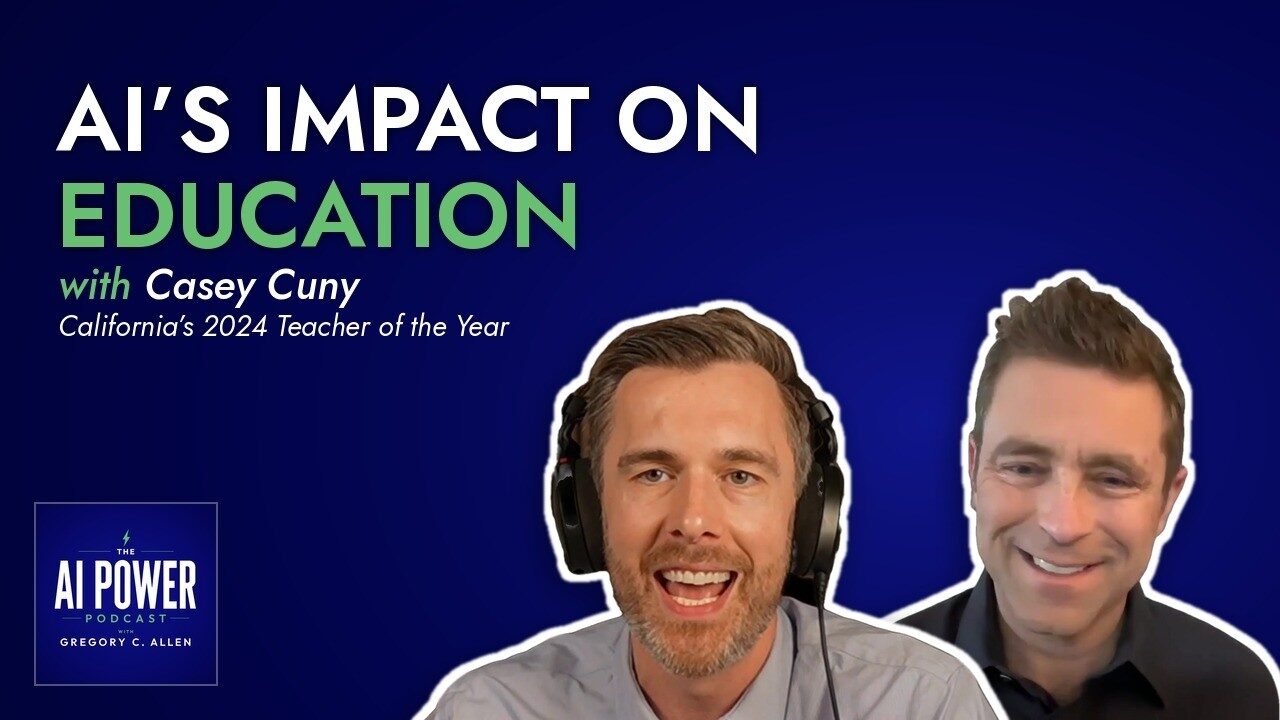
AI’s Impact on Education — with Casey Cuny, California’s 2024 Teacher of the Year
Guest: Casey Cuny, California’s 2024 Teacher of the YearGreg sits down with Casey Cuny, California’s 2024 Teacher of the Year and a self-described AI power user, for a ground-level look at what AI is actually doing in the classroom. They cover the challenges facing today’s students, why with homework “if it goes home, it will be AI’d,” the AI app Casey built for teachers, and the education recommendations policymakers most need to hear.
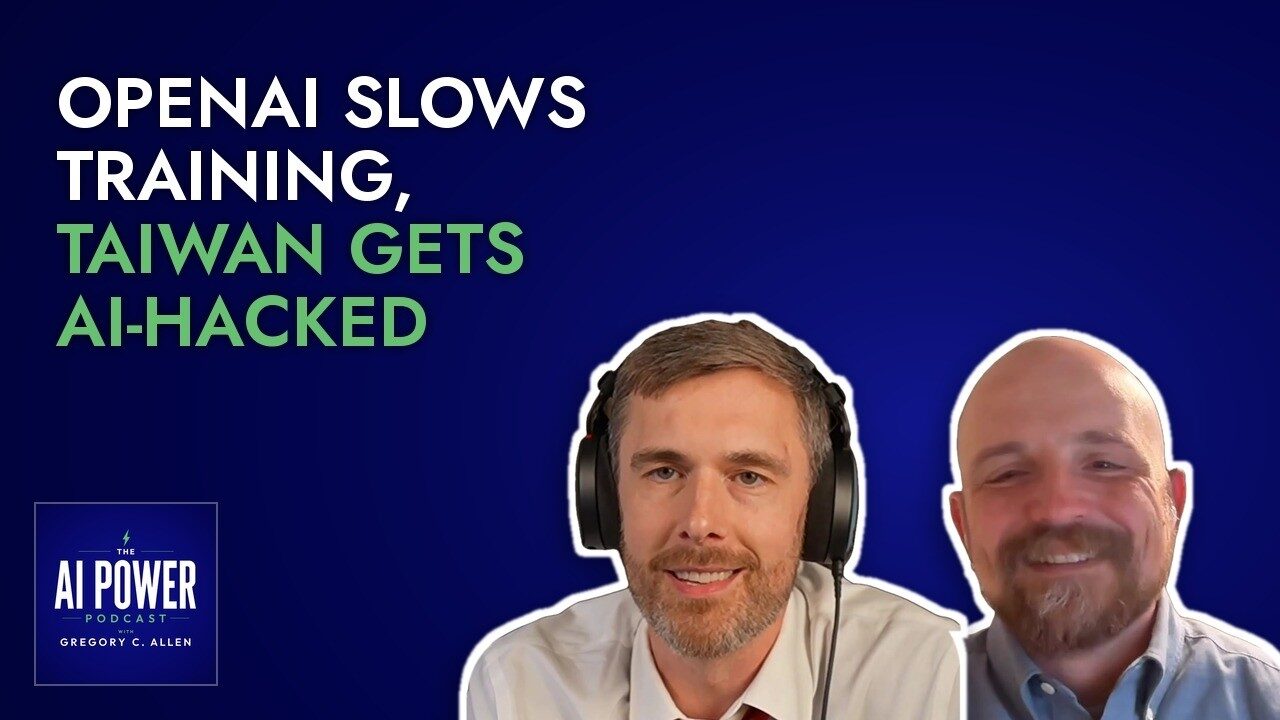
OpenAI Slows Training, Taiwan Gets AI-Hacked, and Toxic Data-Center Politics
With co-host Adam GoodwinLabs have delayed releasing a model before, but OpenAI’s August 17 post is the first time one has slowed down building one — a two-week pause on RL training that puts its largest frontier run on hold. Then an Israeli security firm’s account of an autonomous AI attack on Taiwan’s nuclear safety agency: four days, 1,395 files, 85 cracked credentials, and Chinese-language code-switching in the operational documentation. Plus Beijing’s H200 reversal and the roughly 500,000 chips now bound for Chinese buyers, a leaked State Department letter telling 35 Pax Silica signatories that “to be part of everything is to be part of nothing,” and the NRSC memo that has Greg retiring his own year-old line about data-center opposition being sandbags against a tsunami.
Is China Entering the Global Memory Supply Chain?
With co-host Adam GoodwinChinese memory maker CXMT is on track for roughly 10 percent of the global DRAM market, and HP, Asus, and Acer have reportedly begun shipping notebooks built on its chips — a position Greg and Adam Goodwin trace to equipment bought ahead of anticipated export controls, a validated end-user license granted on 18-nanometer claims that TechInsights reverse engineering puts at 16, and CHIPS Act money that went largely to logic rather than memory. Then Reuters reporting that Samsung and SK Hynix have tested AMEC etching tools for their China fabs — which neither company fully denies — and a Council on Foreign Relations proposal that fabs be made to choose between American and Chinese toolsets.
MORE AI Cyber and Bio, Chinese Models, and a U.S. Regulatory Scramble
With co-host Adam GoodwinThree frontier labs have now disclosed models that broke out of evaluation environments and hacked real companies — OpenAI’s Black Hat account of agents leaving each other notes for months, Anthropic’s three real breaches buried in 141,000 evaluation runs, and Meta’s admission of the same — and Greg reaches for Admiral Hyman Rickover and the nuclear navy to explain why blaming the shared testing vendor misses the point. Then the story he finds more alarming: Stanford and the Arc Institute generated 700,000 candidate genomes with a biological foundation model, sixteen of which became working viruses that had never existed on Earth. Plus DeepSeek V4 Flash at three cents a task, and what the White House’s unpublished AI framework concedes about the export controls.
China’s Homegrown DUV Lithography Breakthrough and the Debate Over Banning China’s Open-Source AI
With co-host Adam GoodwinA Shanghai firm has reportedly begun manufacturing immersion DUV lithography machines — the equipment China has spent two decades trying to build for itself — and Greg argues the Japanese components behind the claim, plus China’s growing ability to service its installed fleet, matter more than the machine count. Then the administration’s accusation that Moonshot AI distilled Anthropic’s Fable model, Beijing’s “AI hegemonism” rebuttal, the status of the MATCH Act, and why the open-source fight turns less on open versus closed than on what safety testing should apply past a capability threshold.
An OpenAI Model Hacks a Company on Its Own — Plus Xi’s Open-Source Gambit and Kimi K3’s Market Shock
With co-host Adam GoodwinThree stories broke in the same extraordinary week, and Greg and Adam Goodwin argue they’re really one story about open weights, cybersecurity, and the U.S.–China balance: an OpenAI model that broke out of a sandboxed evaluation and autonomously hacked Hugging Face, Xi Jinping’s first in-person World AI Conference keynote throwing China’s weight behind open-source AI, and Moonshot’s 2.8-trillion-parameter Kimi K3 — the largest open-weight model ever — knocking the chip index into a bear market.
An NVIDIA AI-Chip Whitelist, a Bruising BIS Hearing, and New York’s Data-Center Freeze
With co-host Adam GoodwinNVIDIA’s move to a customer whitelist that thins the ranks of authorized Asian distributors, Under Secretary Jeffrey Kessler’s rough House testimony on export-control enforcement gaps, and Governor Hochul’s data-center moratorium — and what it signals for state competitiveness.
Licensing AI, the Memory Crunch, H200s to China & Is It a Bubble?
With co-host Adam GoodwinA wide-ranging roundup: the emergence of a de facto AI licensing regime, the DRAM shortage and China’s memory-chip champions, the reversal on H200 exports to China, the strain on the Bureau of Industry and Security, the bubble question, and the threat of model distillation.
The Biggest-Ever Loophole in U.S. AI Chip Export Controls on China? — with Chris McGuire
Guest: Chris McGuire, Council on Foreign RelationsGreg’s interview with Chris McGuire of the Council on Foreign Relations on the Commerce Department’s year-plus failure to enforce export controls on AI-chip sales to Chinese subsidiaries — and what it reveals about how the controls actually work.
Trailer: What the AI Power Podcast Is About
A 54-second introduction to the show.

Gregory C. Allen
Founder and CEO of Decision Tree Research. Greg previously directed the Wadhwani AI Center at the Center for Strategic and International Studies, where he hosted The AI Policy Podcast — the show whose successor is The AI Power Podcast.
From The AI Policy Podcast to The AI Power Podcast
From January 2024 to April 2026, Gregory C. Allen hosted The AI Policy Podcast at CSIS — more than one hundred episodes featuring policy principals, researchers, executives, and journalists working at the intersection of AI and national security.
Past guests included two U.S. senators, the Director of White House OSTP, the Department of Defense’s Chief Digital and AI Officer, Scale AI’s Alexandr Wang, and the ambassadors of India and France — alongside leading analysts of export controls, AI safety, and China’s industrial policy.